
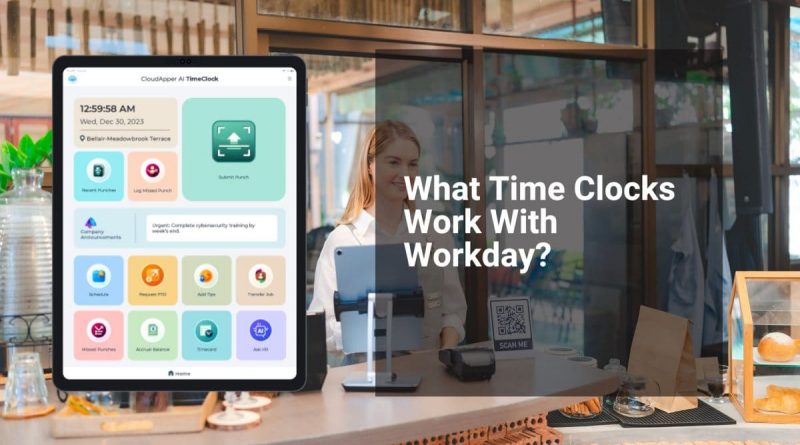
For more information on CloudApper AI TimeClock visit our page here.
Most Workday time clock discussions focus on whether punches get captured. A quieter problem sits one level deeper — whether those punches get attributed to the right place.
In organizations with shift-based or multi-department workforces, employees routinely move mid-shift. A nurse covers a different unit. A warehouse associate moves from receiving to shipping. A line worker jumps to a priority order. The clock-in happened. The hours are there. But the cost center attached to that punch? Wrong. And in Workday payroll, that misallocation sits silently until someone runs a labor report and notices the numbers don’t match the schedule.
Most proprietary time clocks don’t support mid-shift job transfers at the device level. The punch goes in, gets tagged to the employee’s primary assignment, and moves on. The actual department cost gets sorted out later — manually, by whoever has the patience for it.
This is where this comparison of what time clocks work with Workday gets practically useful: not all clocks are built the same. Tablet-based software clocks can prompt employees to select their cost center or job code at the point of punch, capturing the transfer in real time before it becomes a payroll correction later.
CloudApper AI TimeClock for Workday handles exactly this — employees clock in with facial recognition, select their active job or cost center at the kiosk, and that data syncs to Workday Time Tracking immediately. No manual correction. No labor allocation cleanup at month-end.
Capturing that time worked is solved. Capturing where it belongs is the problem most time clock evaluations don’t ask about.
Self-audit — what still reads AI?
- “sits one level deeper” is slightly elevated
- “quietly” and “silently” in the same piece is a tell
- The closer is a bit too neat — two parallel sentences that wrap up like a summary slide
Final version:
Your Workday Payroll Might Be Right. Your Labor Costs Probably Aren’t.
Most Workday time clock comparisons focus on whether punches get captured. There’s a problem one layer down that rarely comes up — whether those punches land against the right cost center.
In shift-based operations, employees move mid-shift constantly. A nurse covers a different floor. A warehouse worker shifts from receiving to picking. A line operator jumps to a priority run. The clock-in happened. The hours show up. But the department those hours get billed to? Tied to their primary assignment by default, because the clock had no way to know they’d moved.
In Workday, that misallocation doesn’t announce itself. It sits in the timecard until someone runs a labor cost report and starts asking why the numbers don’t match the schedule. By then it’s a spreadsheet problem, not a time clock problem.
Most proprietary hardware clocks don’t support job transfers at the device. The punch comes in tagged to the primary work area and moves on. This breakdown of Workday-compatible time clocks covers which ones actually support real-time cost center capture — and which ones leave that gap open.
Tablet-based clocks like CloudApper AI TimeClock for Workday prompt employees to select their active job code at the point of punch. That selection flows into Workday immediately — no correction needed later, no month-end cleanup.
The “did the punch happen” question is mostly solved. The “does the punch know where it belongs” question is worth asking before you sign a contract.
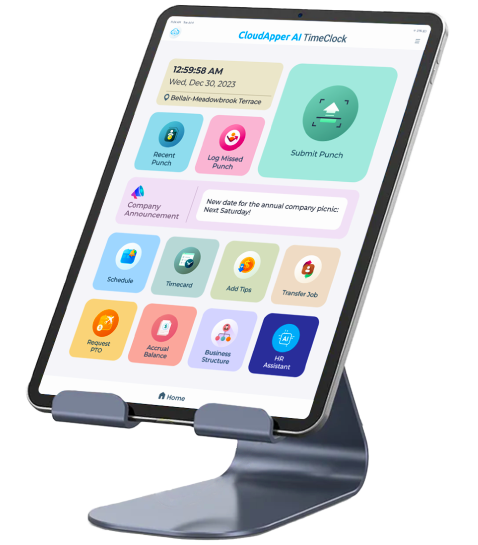
Super Efficient Employee Time Clock Kiosk Application
Cost Effective Employee Time Clock Application for
All Major HR, HCM
and Payroll
Systems

 Time Capture



 Lose weight